Here is some basic information about placing a Roadside Service Call.
If you are in an accident or in a dangerous location on the road CALL 911
Make sure you have the correct local area phone number ( Carry the membership card and enter the membership number & local number in the “contacts area” on your cell phone )
Take a couple of minutes to locate a local address and if a tow is necessary obtain the address of the destination location.
Some companies have apps you can down load. ( This should be done prior, don’t try to use a new system at this critical time ) ( Choose to talk to person in the Road Side Services department
Make the call, you will be talking to a Roadside Service Representative who will be entering all of the important information about your call.
When the call is finished the Roadside Service Representative will pass your Work Order on to the truck dispatchers. ( This will take a few minutes so don’t expect an immediate ETA to be given )
How long do to service calls take? Plan on at least 60 to 90 minutes ( If the truck can make it earlier GREAT but, don’t plan on it. )
A service company will have an office address but the trucks are not there, they are in the field preforming service calls.
Roadside Service Companies will dispatch the closest truck that is capable of helping you with your particular needs.
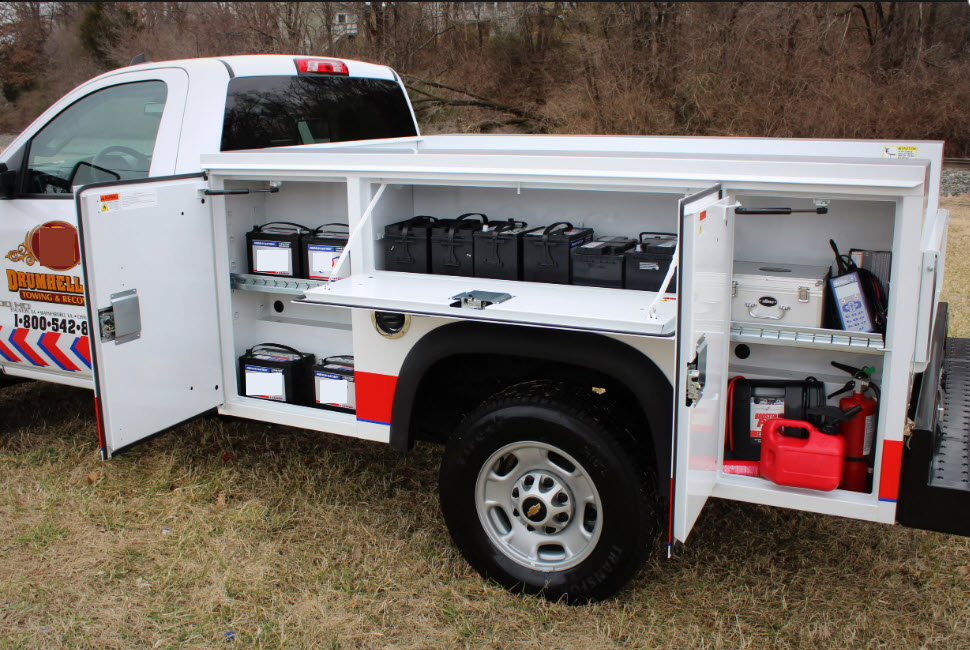
There are light duty (Pickup Trucks that handle flat tires and battery problems )
There are specialty tow trucks for cars that have transmission problems or the car is stuck in park
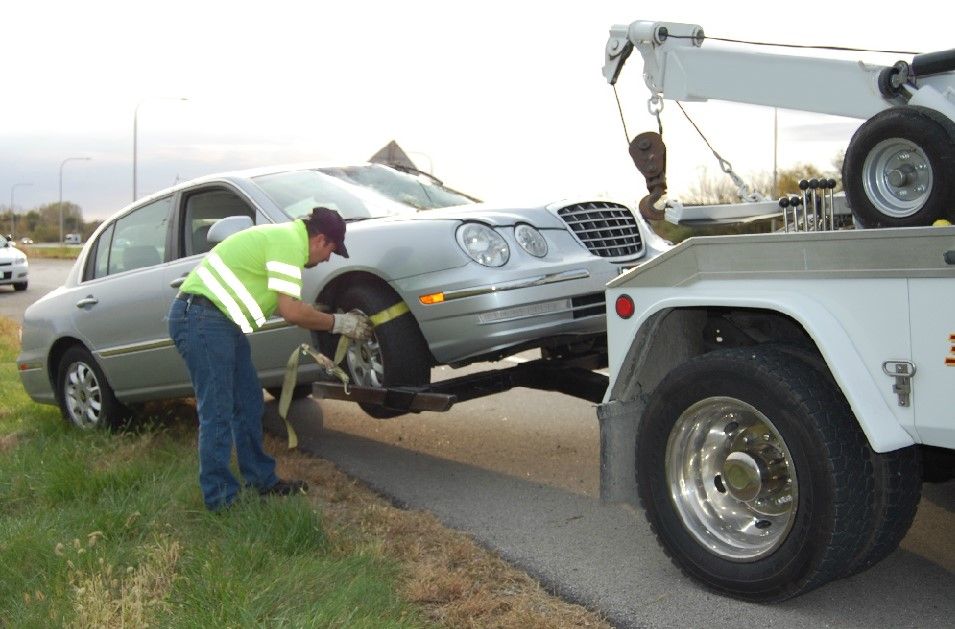
There are several sizes of Flat Bed ( Roll Back ) trucks
There are heavy duty tow trucks for large vehicles and road trips
So a Roadside Service Company could have a truck near by but it’s the wrong truck for your needs.
Flat Bed / Roll BackDolly TruckBattery Turck
Anticipating Service Arrival
Roadside Service consumers have to have a REALISTIC EXPECTATION for arrival times. Times have changed and just the shear volume of everyday traffic impedes the travel commuters and the performance of service vehicles. The service vehicles heavier and slower. Service people realize it’s very stressful to breakdown. It’s dangerous, time consuming and expensive. There is a trade off, some private companies have a much shorter response time but the Rates are much higher.
Here are some facts about service call response times:
Everyone expects service quickly ( Some Expect 15 to 20 Minutes )
Everyone believes their situation is more important that others ( Some Are – Interstate calls, Kids and Pets Locked in the car and medical )
There are not as many Roadside personnel in rural areas
The fact is your car has broken down and it’s one of those life events we all endure. It’s and interruption to your day and we all have to adjust to the situation. Learn and Be Prepared is the fastest way to deal with car breakdowns
Published by Climate MAXZ - Climate Fortified Building Materials
CLIMATE MAXZ
Climate Fortified Building Materials
Tennessee – 615-397-0406 – http://ClimateMaxZ.com – Dan Zellars
AI Residential Building Materials Report – 12-29-2025
Among common residential building products (especially exterior elements like siding, roofing, decks, and trim), natural wood consistently ranks as the one requiring the most maintenance.
This includes wood siding (e.g., cedar clapboard or shingles), wood shakes/shingles for roofing, and wooden decks or trim. Here’s why wood stands out:
It is highly susceptible to rot, warping, insect damage (e.g., termites), mold, and UV fading.
Regular upkeep is essential: power washing, staining/sealing (every 3–7 years), painting (often every 5–10 years), caulking to prevent water intrusion, and frequent inspections to catch issues early.
Without diligent care, wood deteriorates quickly, leading to costly repairs or full replacement far sooner than alternatives.
Comparison of Common Exterior Materials by Maintenance Needs
Here’s a quick ranking from highest to lowest maintenance (based on typical residential use):
Natural Wood (siding, shakes, or decking) → Highest maintenance
Frequent sealing/staining/painting required.
Prone to weather damage, pests, and rot.
Often needs repainting or resealing every few years.
Traditional Stucco (especially hard-coat)
Requires regular crack inspections and repairs (cracks allow water intrusion).
Can develop mold/algae in humid areas and needs cleaning/patching.
More upkeep than modern alternatives but less than wood.
Wood Roofing (Shakes/Shingles)
Similar issues to wood siding: needs cleaning, pest treatment, and resealing to prevent rot/mold.
High maintenance compared to asphalt, metal, or tile roofs.
Fiber Cement (e.g., James Hardie siding)
Moderate: occasional cleaning and repainting every 15–30 years.
Resists rot/insects far better than real wood.
Vinyl, Metal, or Brick → Very low
Vinyl: occasional washing.
Metal: minimal (may need rust checks in harsh climates).
Brick/Stone: virtually none beyond cleaning.
Wood products dominate discussions of “high-maintenance” exteriors because they offer natural beauty but demand ongoing human intervention to last. Modern engineered alternatives (like fiber cement or composites) mimic wood’s look with dramatically less effort.
If you’re choosing materials for a home, consider your climate—wood fares worse in wet/humid or bug-prone areas—and your willingness to maintain it. For truly low-upkeep homes, most experts recommend steering clear of natural wood exteriors entirely!
Climate MAXZ appears to be a building materials and construction company based in McMinnville, Tennessee (with mentions around areas like Center Hill Lake and Cumberland County). It specializes in climate-resilient, often wood-alternative or wood-free building products designed to withstand extreme weather, pests, mold, fire, and other environmental challenges—while offering good energy efficiency and durability.
They focus on promoting homes and structures that are more sustainable and long-lasting in varying climates, particularly in regions like Tennessee with humidity, storms, and potential wildfire risks in some areas.
Key Building Materials and Systems They Promote
FastFrame Steel Framing — Lightweight steel framing for residential, agricultural, and commercial buildings. It’s termite-proof, fire-resistant, and forms the structural backbone of many “Climate MAXZ Homes.”
Thermasteel Insulated Panels (or similar insulated steel panels/SIPs) — Structural insulated panels (SIPs) with high insulation values (often R-40 to R-50), combining framing and insulation for energy-efficient, quick assembly. These are used for walls, roofs, etc., in steel-framed SIP homes.
Trusscore PVC Wall & Ceiling Boards — Durable, moisture-resistant PVC panels as alternatives to traditional drywall or wood, resistant to mold/mildew.
TimberTech Advanced PVC Decking — Composite/PVC decking that’s splinter-free, cooler underfoot, slip-resistant, and low-maintenance compared to wood.
OUTDURE Aluminum Deck Framing — Wood-free deck systems using aluminum for longevity and resistance to rot/insects.
Metal Roofing (including steel shingles/options) — Emphasized for durability in Middle Tennessee’s terrain and weather.
Other mentions include Owens Corning fiberglass-reinforced materials and Class “A” fire-rated products for fire-prone areas.
These materials aim to create “wood-alternative” or “wood-free” builds that resist mold, pests, termites, extreme weather, and offer better insulation/performance than traditional wood framing.
They have a YouTube channel (@ClimateMaxzHomes) with videos on SIP panel construction, steel framing, deck systems, and real Tennessee home builds. Their website seems to be referenced as ClimateMaxz.com or related blogs like homescenterlaketn.wordpress.com.
If you’re in or near Tennessee (or looking into resilient building options), this company focuses on affordable, long-lasting alternatives suited to humid/subtropical climates with occasional severe weather. Let me know if you’d like more details on a specific product, comparisons to traditional materials, or visuals/examples!
Edit"Climate Maxz Building Materials"
Home Page
TimberTech Advanced PVC Decking - Climate MaxZ Building Materials Tennessee
View all posts by Climate MAXZ - Climate Fortified Building Materials





 Keys to Roadside Services