
Keys to Roadside Services recommends every vehicle have some form of Breakdown Illumination for day time and especially night time. We recommend LED Safety Lights rather than the traditional burning flares. Please see state the normal state regulations on hazard lighting below:
LED SAFETY LIGHTING VS Road Flares
- LEDs are safer to use
- LEDs Are easier to store
- LED lights preform longer
- Allow versatile placement around the vehicle
We Recommend Two Products
Circular Disks
The Emergency Disks are Magnetic, Hang from the car or lay on the Ground

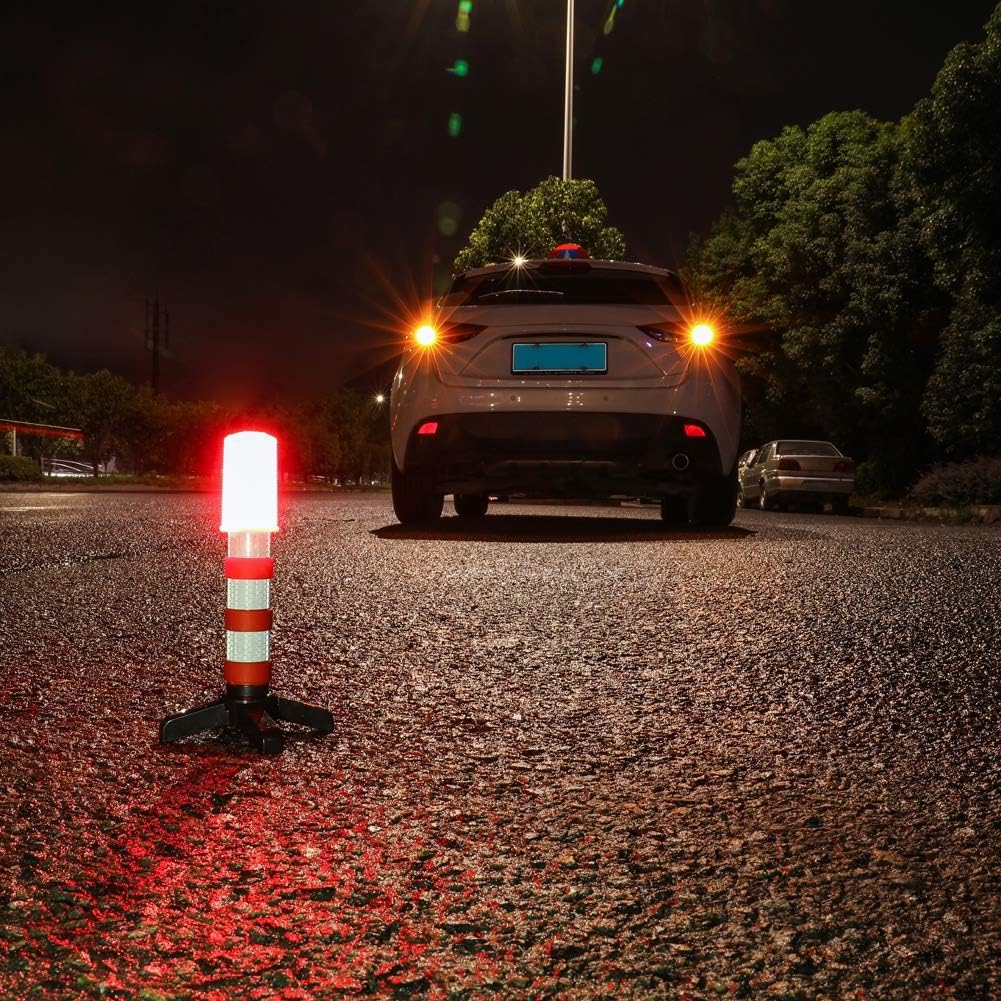
LED Flares
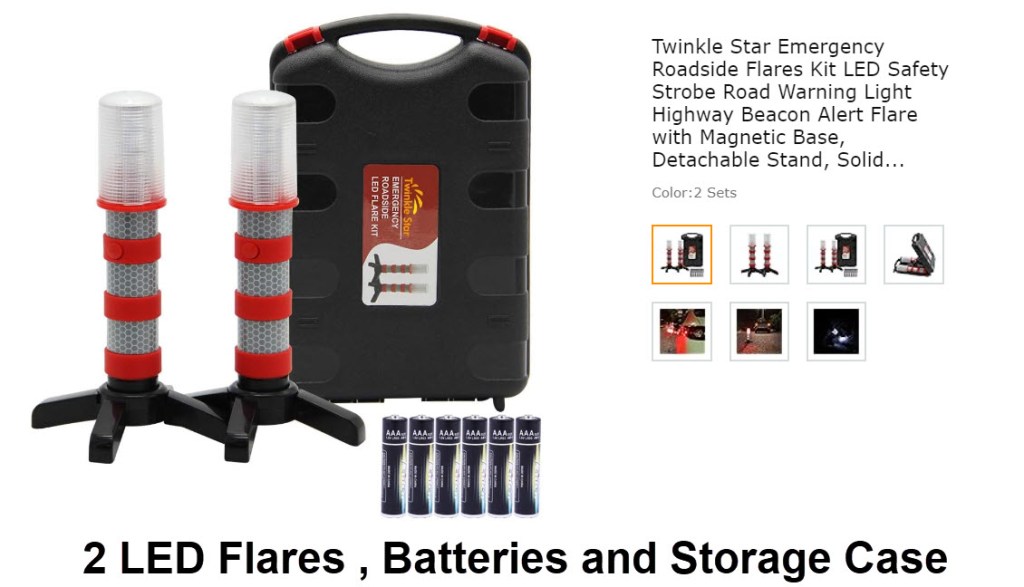
We recommend the use of both the Light Disks and the Flairs
Visit our Roadside Service Illumination Page
State Breakdown Requirements
Whenever any bus, truck, or truck tractor, except pickup trucks having not more than two (2) rear wheels and equipped with emergency flashing lights at front and rear, is disabled upon the traveled portion of the highway or the shoulder next thereto, except within a business or residential district of a municipality, the following requirements shall be complied with during the period of the disablement:(1) During the time when lights are required, that is, between one-half (½) hour after sunset and one-half (½) hour before sunrise and at all other times when there is not sufficient light to render clearly discernible a person two hundred feet (200′) ahead, a lighted fusee shall be immediately placed on the roadway at the traffic side of the motor vehicle. As soon thereafter as possible, and in any case within the burning period of the fusee, three (3) lighted flares or pot torches shall be placed on the roadway as follows:(A) One (1) in the center of the line of traffic occupied by the disabled motor vehicle not less than forty (40) paces or approximately one hundred feet (100′) distant therefrom in the direction of traffic approaching in that line;(B) One (1) not less than forty (40) paces, or approximately one hundred feet (100′) from the vehicle in the opposite direction;(C) One (1) at the traffic side of the vehicle approximately ten feet (10′) rearward or forward thereof;(D) If the motor vehicle is disabled within three hundred feet (300′) of a curve, crest of a hill or other obstruction to view, the flare in that direction shall be so placed as to afford ample warning to other users of the highway, but in no case less than forty (40) paces, approximately one hundred feet (100′) nor more than one hundred twenty (120) paces, approximately three hundred feet (300′), from the disabled vehicle;(E) Care should be taken in placing any flare, fuzee, or any signal produced by a flame to prevent igniting any gasoline or other inflammable liquid or gas.
Visit our Roadside Service Illumination Page
Keys to Roadside Services
Roadside Assistance Information
 Keys to Roadside Services